Duke
JUST IN: Explosive ACC Scandal — Florida DEMANDS $25K Punishment as Jon Scheyer Accused of Storming at Todd Golden and Referees After Duke’s ‘Rigged’ Finish!….Read More…..

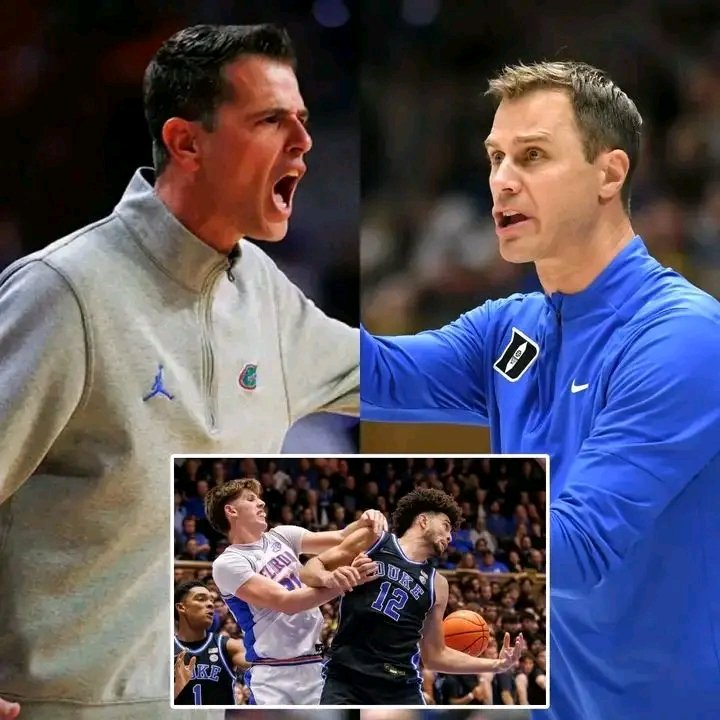
JUST IN: Explosive ACC Scandal — Florida DEMANDS $25K Punishment as Jon Scheyer Accused of Storming at Todd Golden and Referees After Duke’s ‘Rigged’ Finish!….Read More…..
In the wake of Duke Blue Devils’ narrow 67‑66 win over the Florida Gators on Tuesday night — a victory sealed by a clutch 3‑pointer from sophomore Isaiah Evans with 19.7 seconds remaining — outrage has erupted around officiating and alleged unsportsmanlike behavior by Duke head coach Jon Scheyer.
Florida fans, commentators and even some within the program are now calling for swift punitive action — including a proposed $25,000 fine — after accusations that Scheyer “stormed” toward opposing coach Todd Golden and the referees in the aftermath of what many deemed a “rigged” finish. Though no official penalty has been announced by the conference, the uproar has laid bare deep suspicion over whether the game was called fairly.
🔥 What Went Down: The Game — and the Aftermath
On paper, it was a classic: Florida trailed by 15 at halftime, mounted a huge second‑half rally — thanks to 24 points from Thomas Haugh and steady play from Boogie Fland — and even hit a late 3‑pointer to lead 66‑64 with under 45 seconds to go.
Then came the dagger: Evans, in the midst of a cold shooting night (0‑for‑7 from deep), launched a go-ahead 3 with 19.7 seconds left. Duke’s defense then forced a turnover on the final possession — Florida’s desperation long‑range heave was tipped away, ending the game 67‑66.
On the stat sheet: Duke freshman Cameron Boozer dropped 29 points, while Florida grabbed a massive 44‑33 rebounding advantage (20 offensive boards), underlining how tightly contested — and close to a Gators win — the game was.
But the story didn’t end with buckets and boards. Postgame, much of the discussion shifted to officiating — and to emotions spilling over.
🚨 The Scandal: Claims, Accusations, and Demands for Punishment
The controversy centers on several key issues:
Analysts and fans questioned a late call involving Gator forward Thomas Haugh, where what many expected to be a “flagrant” foul was downgraded to a dead-ball technical. “How can you call for a flagrant review and it turns into a dead ball technical?” tweeted one analyst.
According to multiple voices in the aftermath, there were other dubious decisions: a missed goaltending call on a block, a lane violation wiping out a Boozer free throw miss, and a disputed out-of-bounds possession call. Many saw a pattern that overwhelmingly favored the home team.
Adding fuel to the fire: Several Gators fans — and now the program itself — claim that Scheyer physically “stormed” toward Florida coach Todd Golden and the referees in protest at the final whistle, raising tensions even further. Those fans are reportedly calling for a $25,000 fine against Scheyer or his institution, calling the finish “rigged.” (Note: at the time of writing, no official fine has been confirmed.)
One fan captured the sentiment on social media:
> “No, it wasn’t. It was called a dead ball technical.”
Meanwhile, Golden expressed frustration after the game, lamenting that to win at venues like Duke’s famed home court, “you’ve got to outplay them by 10 points — because you’re not going to get any 50‑50 calls.”
This incident taps into larger, long‑running complaints about officiating bias, home‑court advantage, and fairness in college basketball — especially in high-profile games between powerhouse programs.
Some argue the alleged uneven calls not only impacted this game’s outcome but could set a dangerous precedent: when referees appear to favor home teams, trust in fairness erodes.
Calls for punishment — such as a fine for Scheyer — illustrate the growing appetite among fans and analysts for accountability, especially if coaches are perceived to be using intimidation or confrontation to influence officiating.
And for the broader landscape of college hoops: controversies like this can taint marquee matchups, fuel conspiracy theories, and cast doubt over the legitimacy of results — something stakeholders from players to fans to conference officials ought to consider seriously.
📣 What’s Next: What Could Happen — And What Fans Are Watching
The conference office ( Atlantic Coast Conference, or ACC ) may open a review into the game, particularly the officiating and any alleged misconduct by Scheyer. If evidence supports the accusations, a $25,000 fine — or other sanctions — could be levied.
Social media and fan pressure will likely grow, especially from rival schools and supporters of fairness, demanding transparency over how such games are officiated.
Within college basketball at large, this could prompt renewed calls for reforms: clearer review protocols, stricter guidelines on technicals/flagals, and perhaps more oversight in high‑stakes games.












-

 Alabama crimson5 months ago
Controversy Erupts: Four Referees Suspended After Alabama–Vanderbilt Game Amid Officiating Scandal…Read More…
-

 West Virginia2 months ago
**NO.1 Player Commits To West Virginia Football**
-

 Edmonton Oilers6 months ago
Connor McDavid and Wife Lauren Kyle Welcome Twins and Reveal Their Names – Fans Excited About the Growing McDavid Family!….Read More….
-

 Imagine Dragon 🐉4 months ago
**Imagine Dragons and Crew Set to Embark on Exciting World Tour: Dates Revealed**
-

 Kentucky Wildcat2 months ago
**Nation’s Top-Ranked Player Commits to Kentucky Basketball**
-

 Arkansas Razorbacks3 months ago
**Nation’s Top-Ranked Player Commits to Arkansas Razorbacks Basketball**
-

 Arkansas Razorbacks5 months ago
Back in Charge: Arkansas Razorbacks Officially Hire Bobby Petrino as Head Coach, Marking a Dramatic Return and a Bold New Era for the Program….Read More……
-

 BYU Football3 months ago
**Nation’s Top-Ranked Player Commits to BYU Football**