Duke
MARCH CAME EARLY: Duke Survived A Chaotic, Season-Defining Test Against Wounded Champions—But The Clutch Sequence Exposed Their Biggest Remaining Flaw…Read More….

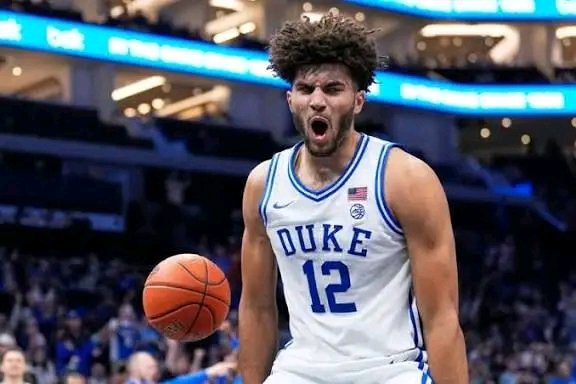
MARCH CAME EARLY: Duke Survived A Chaotic, Season-Defining Test Against Wounded Champions—But The Clutch Sequence Exposed Their Biggest Remaining Flaw…Read More….
In a game that felt far more like the pressure cooker of a Sweet Sixteen showdown than a mid-season clash, the Duke Blue Devils escaped with a heart-stopping win over the defending national champions on Tuesday night—an escape that may define their season but also exposed a glaring weakness that could haunt them when the real March arrives.
From the opening tip, Cameron Indoor Stadium was vibrating with postseason intensity. The champs arrived battered, missing two starters and relying heavily on bench depth that had hardly been tested this season. Duke, meanwhile, entered with momentum and health, but also with expectations sky-high and pressure mounting. What unfolded was a 40-minute slugfest that delivered everything except comfort for either side.
The Blue Devils’ young stars were electric early, racing out to an 11-point lead behind transition bursts and sharp ball movement. Cameron Boozer controlled the paint, Jared McCain buried timely threes, and freshman point guard Isaiah Evans played with rare poise. It felt like Duke was ready to pull away.
But champions, wounded or not, don’t fold. A late-half run—sparked by elite offensive rebounding and brutally physical post defense—punched Duke directly in the mouth. By halftime, the lead had evaporated, and the defending champs had taken control of the tempo entirely. Duke suddenly looked rattled, slowed, and reactive rather than aggressive.
The second half was where everything turned chaotic.
Both teams traded blows, neither leading by more than five. Whistles came late, bodies flew across the floor, and possessions lasted deeper and deeper into the shot clock. It became a war of attrition, and for the first time all season, Duke was forced to win ugly rather than with highlight-reel offense.
Yet even in the chaos, the Blue Devils found a winning sequence—one that showcased their maturity and grit. With 63 seconds left and Duke trailing by one, McCain hit a contested step-back three that sent Cameron Indoor into eruption mode. On the next defensive possession, Boozer swatted away a potential go-ahead layup. Moments later, Evans iced two free throws to put Duke ahead for good.
But while those plays delivered the victory, what came before them exposed Duke’s most dangerous flaw: their late-game execution in the halfcourt.
For nearly eight minutes, Duke failed to generate clean looks, settling for isolation jumpers and over-dribbling. Their offense became predictable, stagnant, and at times panicked. Against elite tournament-level defenses—especially ones fully healthy—those stretches can be fatal.
Head coach Jon Scheyer acknowledged it postgame, saying the team must “trust the system for all 40 minutes,” a clear nod to the lapses that nearly cost them the game.
Still, a win is a win. And this one felt like a March-preview: tense, physical, emotional, dramatic.
Duke proved they can survive a heavyweight fight. But if they want to do more than survive in March—if they want to advance deep into April—the flaw exposed on Tuesday must be fixed.
Because games like this will come again. And next time, the opponent might not be wounded.













-

 Edmonton Oilers5 months ago
BREAKING: EDMONTON OILERS BOLSTER PLAYOFF DEPTH WITH SHOCKING SIGNING OF NHL VETERAN COREY PERRY ON ONE-YEAR DEAL WORTH…READ MORE…
-

 Edmonton Oilers5 months ago
BREAKING: EDMONTON OILERS SIGN VERSATILE FORWARD TO MULTI-YEAR DEAL TO BOOST OFFENSIVE DEPTH — HE CITES TWO KEY REASONS FOR JOINING OILERS….. DETAILS BELOW….
-

 Montreal Canadien6 months ago
‘SHE’S BEEN MY ROCK’: MONTREAL CANADIENS STAR COLE CAUFIELD STUNS FANS WITH SURPRISE ENGAGEMENT TO LONGTIME GIRLFRIEND AFTER YEARS OF PRIVATE ROMANCE…. READ MORE…..
-

 Edmonton Oilers5 months ago
BREAKING: EDMONTON OILERS MAKE BIG MOVE, SIGN TOP FREE AGENT CENTER ELIAS LINDHOLM TO MULTI-YEAR DEAL WORTH….READ MORE….
-

 Edmonton Oilers5 months ago
BREAKING: EDMONTON OILERS MAKE SPLASH IN FREE AGENCY, SIGN STAR TO MULTI-YEAR DEAL TO BOOST OFFENSIVE FIREPOWER…..A HUGE DEAL WORTH…..READ MORE……
-

 Montreal Canadien6 months ago
PK SUBBAN’S MARRIAGE TAKES A HIT: NHL STAR FILES FOR DIVORCE FROM….Reason Below…..
-

 Montreal Canadien6 months ago
SHOCKING OFF-ICE DEVELOPMENT: Montreal Canadiens’ Martin St-Louis Announces Divorce…..Reason Below….
-

 Montreal Canadien6 months ago
DOUBLE THE TROUBLE, TWICE THE LOVE”: NICK SUZUKI AND WIFE WELCOME SURPRISE TWINS, SHARING JOYOUS NEWS WITH FANS…. READ MORE….