Blog
Beyond the Anthems: Deep Cuts from Led Zeppelin’s Catalog That Deserve a Revisit

Despite boasting one of the most celebrated discographies in rock history, Led Zeppelin’s deep catalog contains several lesser-known tracks that often get overshadowed by massive radio hits like “Stairway to Heaven” or “Whole Lotta Love.”
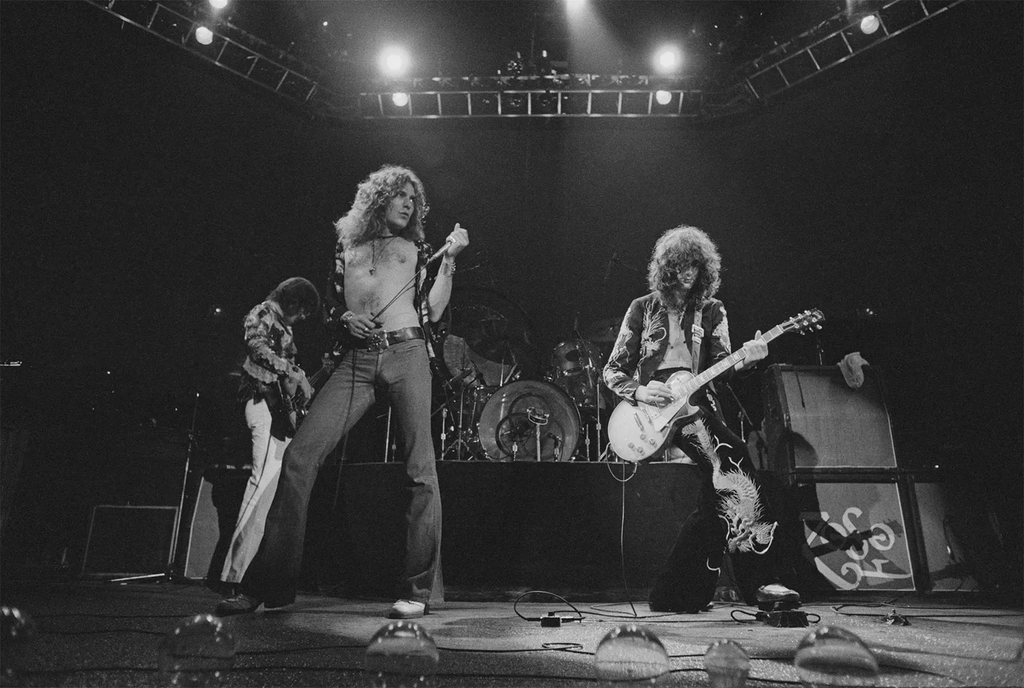
For fans navigating the legendary band’s extensive body of work, music analysts point to a selection of overlooked gems that showcase the group’s stylistic range, intricate musicianship, and behind-the-scenes history.
According to music commentators highlighting hidden treasures in classic rock catalogs, four specific tracks stand out as essential listening for fans looking to venture beyond the hits.
“That’s The Way” (Led Zeppelin III)
Written by guitarist Jimmy Page and frontman Robert Plant during a retreat at Bron-Yr-Aur—a remote cottage in Wales—”That’s The Way” offers an acoustic contrast to the band’s signature heavy sound. The track relies heavily on nature imagery, but beneath its folk-inspired arrangement lies a direct reflection on the band’s personal experiences. The lyrics touch on the hostility and aggression the members faced while touring the United States during their early years, largely due to their long hair and unconventional rock-and-roll appearance.
“Royal Orleans” (Presence)
Appearing on the 1976 album Presence—a record that remains a topic of debate among fans and critics—”Royal Orleans” is driven by a tongue-in-cheek lyricism rooted in real-life touring escapades. The track was reportedly inspired by an incident involving a band member bringing a drag queen back to their hotel in New Orleans. The lyricism captures the colorful nature of the encounter:
“New Orleans queens / Sure know how to schmooze it / Maybe for some that seems alright / When I step out, strut down with my sugar / She’d best not talk like Barry White!”
“Four Sticks” (Led Zeppelin IV)
Nested within the band’s iconic fourth album, “Four Sticks” is an experimental track characterized by shifting time signatures and complex rhythm patterns. The song earned its title from drummer John Bonham, who recorded his parts holding four drumsticks simultaneously—two in each hand. Due to its technical difficulty and demanding physical execution, the band rarely performed the track live, with only a single recorded live performance surviving from a 1973 concert in Copenhagen.
“Tea For One” (Presence)
Closing out Presence, “Tea For One” slows the tempo down significantly, leaning heavily into a laid-back, melancholic blues vibe. Rather than relying on aggressive guitar riffs, Page approached the guitar work with deliberate subtlety to match the track’s mood.
In a classic interview with Trouser Press, Page revealed the deliberate restraint required for the recording session:
“I was really a bit frightened of it,” Page admitted regarding the solo approach. “I thought, ‘What’s to be done?’ I didn’t want to blast out the solo like a locomotive or something, because it wasn’t conducive to the vibe of the rest of the track. I was extremely aware that you had to do something different than just some B.B. King licks.”
Together, these four recordings highlight the versatility, humor, and technical experimentation that defined Led Zeppelin beyond their mainstream arena-rock legacy.

-

 Blog7 months ago
RISKY 😲: Nation’s No. 1 QB Commits to Oregon Ducks…Read More…
-

 Blog7 months ago
RISKY 😲: Nation’s No. 1 QB Commits to Arizona State Sun Devils…Read More…
-

 Blog3 months ago
LEYTON ORIENT AGREE DEAL FOR TEENAGE WINGER
-

 Blog7 months ago
RISKY 😲: Nation’s No. 1 QB Commits to Georgia bulldogs…Read More…
-

 Blog7 months ago
RISKY 😲: Nation’s No. 1 QB Commits to Michigan State University…Read More…
-

 Blog7 months ago
RISKY 😲: Nation’s No. 1 QB Commits to Ohio State Buckeyes…Read More…
-
 Leicester City F.C.5 days ago
Leicester’s £100m Training Ground Branded a Hidden Obstacle by Former Leicester City Manager as Club Battles League One Reality.
-

 Blog7 months ago
RISKY 😲: Nation’s No. 1 QB Commits to Ole Miss…Read More…